
The thesis
How much can one person build?
The one-person unicorn is the horizon. The practical work is designing a business whose complexity does not grow as quickly as its reach.

01
The one-person unicorn
A company of extraordinary value, directed by one person. The idea becomes interesting when you ask what makes it possible: a product customers can adopt, a way to reach them, and an operation that keeps working as demand grows.
Software can multiply productive capacity. Ownership, judgment and accountability still sit with the founder. The one-person unicorn is an ambition; the four ventures are where Quasilife investigates the parts within reach today.
What has to exist around that person?
02
Judgment is the constraint
When software makes implementation cheaper, choosing the right work matters more. A founder still has to recognise demand, set a quality bar and decide which promises the business can keep.
A solo operating model begins in those choices: a focused customer, a manageable product surface, self-serve paths where they help, and clear routes for exceptions. Every recurring obligation has to fit the person responsible for it.
Staying solo-operated is a design choice.
03
From a product to a factory
Reuse begins below the brand: billing, data collection, document operations, customer support, distribution and monitoring. A component earns its place when it solves a recurring problem reliably enough to be used again.
PDFops exposes document operations for software and agents. bulldo.gs puts workspace tasks behind focused tools. PolandRent and LE TEEN explore how public data becomes a useful product for a specific decision. Each tests a different part of the operating problem.
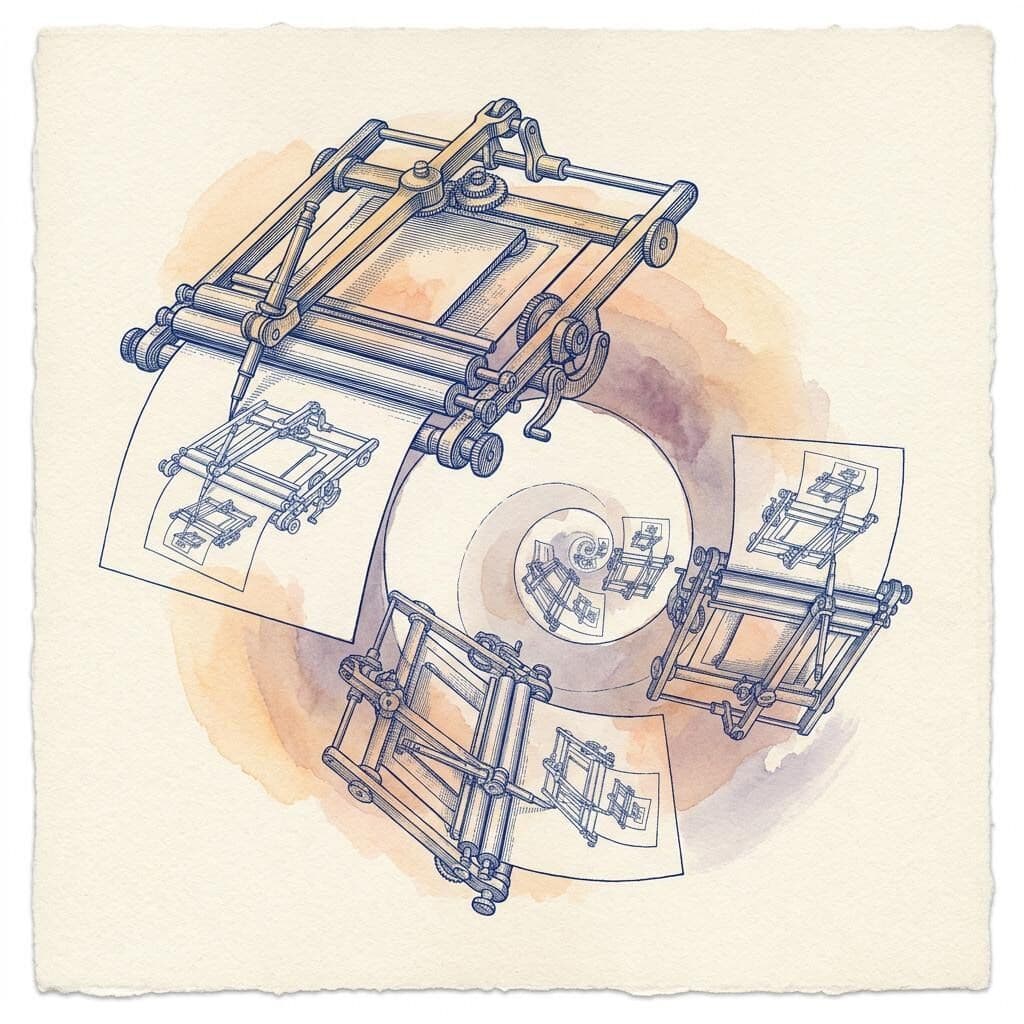
The longer-term aim is a software factory that incubates other software factories: founders equipped to create and operate their next product, rather than starting the machinery from scratch.
04
Start with the constraint
For a new venture, the constraint may be finding demand or reaching a first useful version. Backing should address that constraint with the right mix of capital, product work and operating help.
An established company starts elsewhere. Customers, history and working software already exist. The opportunity may sit in an expensive manual process, an owner-dependent operation or a product that has stopped improving. Acquisition and owner partnership offer different ways to work on it.
Begin with the work that could make a material difference. Decide how to measure the result and who owns it. Then choose the relationship: a sale, a retained interest or a partnership around a defined contribution.

05
The hand stays human
Automation needs a boundary as well as a task: what it may do, what it must verify and when a person needs to intervene. An unattended workflow that silently stops is a liability. A dependable one makes time for the decisions only the owner can make.
Building something independent, or weighing the future of a software business you own?